Prevention
Exercise / fitness check
Exercise ECG and stress echocardiography
Are my coronary arteries blocked? How much exertion can I safely take on?
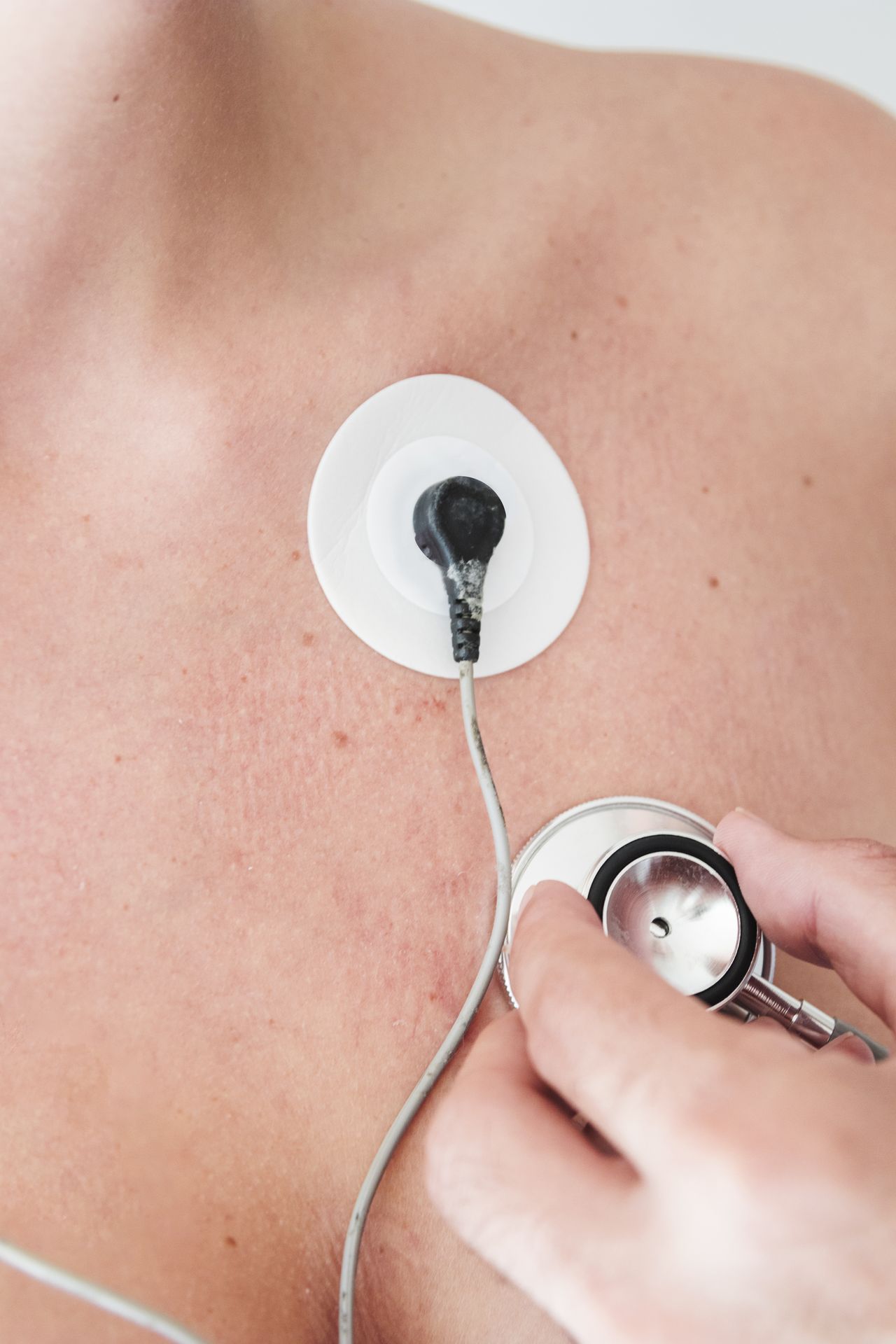
With the exercise ECG we test your cardiovascular system and tell you where your limits are and whether there are already signs of reduced blood flow to the heart muscle. This can detect danger in time, before a heart attack occurs.
Even more precise results come from stress echocardiography. During the exercise ECG on a bicycle ergometer, a transthoracic echocardiogram (cardiac ultrasound) is performed. This allows a more accurate assessment of how the heart functions during physical effort. The examination is non-invasive and involves no radiation, unlike myocardial scintigraphy, coronary CT or cardiac catheterisation.
Who the check is for
Reasons include chest tightness on exertion, an unclear performance limit, return to sport after a break, occupational fitness questions, or assessing whether coronary flow limitation is likely.
How it runs
After the history and a resting ECG, ergometry is performed on a bicycle. A stress echo can show heart-wall motion under increasing load. The test is stopped if symptoms, blood pressure or ECG changes require it. Sportswear and sturdy shoes are useful.
Results
You receive an assessment of current exercise capacity and advice on training, daily strain or further tests. A normal test does not exclude every disease; an abnormal test does not automatically mean an intervention. The next steps are explained.
Related pages
The information on this page does not replace individual medical advice, examination or treatment. Whether any measures are appropriate is decided in a personal consultation. Courses differ from person to person.